Voyage to the Roof of the World by Private Train
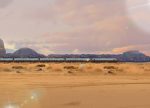
Beijing to Lhasa on the Golden Eagle Silk Road Express Private Train
Overview
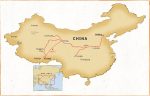
Embark on an unforgettable 12-day journey through the captivating landscapes of China and the fabled heights of Xizang on our China Rail Discovery tour. Travel in unrivaled luxury aboard the Golden Eagle Silk Road Express, exploring iconic cities such as Beijing, Xi’an, Chengdu, Dunhuang, and Xining. Experience the remarkable blend of ancient culture and natural wonders along this legendary route.
Travels to: China
Photos and details: Discover what life is like aboard the Golden Eagle Silk Road Express.
Map
Itinerary
-
Days 1-3: Beijing (China), board the Golden Eagle Silk Road Express

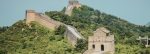
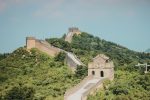
Begin with a two-night stay at a top hotel in Beijing, and connect with fellow travelers at a welcome reception. Head outside the city to take in the the majestic Great Wall at Badaling, and back in the capital stroll through the vast complex of the Forbidden City. Cross Tianamen square and appreciate the beauty of the Summer Palace. Or check out Beijing’s more modern architecture including the Olympic Village and the iconic CCTV Tower. Round out the time in Beijing with a traditional Peking Duck dinner before bioarding the luxurious Golden Eagle Silk Road Express, where a festive welcome dinner marks the beginning of your rail adventure in style.
HIGHLIGHTS
- The Great Wall at Badaling, with stunning views of the countryside
- Central Beijing’s ancient and modern sites, the Forbidden City, Tiananmen Square, and the Summer Palace
- A traditional Peking Duck dinner at a renowned local restaurant
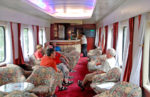
- Settling into the luxurious Golden Eagle Silk Road Express
-
Days 4-6: Luoyang, Xi’an, Chengdu
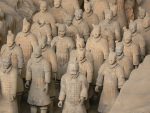
Head west into China’s Silk Road history as you explore Luoyang, one of the seven ancient capitals of China. Here, discover Longmen Caves, a UNESCO World Heritage Site as well as the legendary Shaolin Temple. Continue to Xi’an’s ancient city walls and the magnificent Terracotta Warriors. At a special Tang Dynasty show, celebrate Xi’an’s cultural heritage, pairing authentic cuisine with spectacular music and dance. In Chengdu, visit the Giant Panda Research Base and enjoy the mesmerizing Sichuan Opera Show.
HIGHLIGHTS
- Explore Longmen Caves, a UNESCO World Heritage Site
- Enjoy the Tang Dynasty cuisine, music, and dance
- Inspect the originally crafted warriors of Terra Cotta army
- Experience the vibrant traditions of Sichuan opera
-
Day 7-9: Xining, Dunhuang
Xining is the capital of Qinghai Province. Visit the local Buddhist monastery of Ta’er Si, and the Qinghai Provincial Museum, which showcases a diverse collection of artifacts. Stroll along Shui Jing Xiang, also known as Shuijing Alley Market.
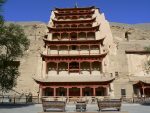
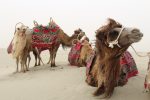
Explore the oasis town of Dunhuang, which ancient travelers had to pass through on their way to and from their destinations. Take a short camel ride at Crescent Moon Lake, and visit the UNESCO-listed Mogao Caves, where tradition says that a 4th-century Buddhist monk carved and decorated the first cave at the place where he had a vision of a thousand Buddhas.
Return to Xining to board the high-altitude train to Xizang, spending one night aboard – a unique rail experience. (Or opt to fly to Lhasa instead of taking the high-altitude train.)
HIGHLIGHTS
- Xining, formerly the Xizang province of Amdo
- Local Buddhist monastery of Ta’er Si, with yak-butter sculptures
- Visit to Shuijing Alley Market
- Mogao Thousand Buddha Caves, UNESCO World Heritage Site near Dunhuang
- High-altitude railway to the Xizang Plateau
-
Day 10: High Altitude train to Lhasa via Tangula Pass
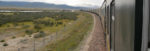
Cross the rugged landscape, climbing in the special high-altitude train and meeting your fellow local and foreign passengers. Admire the pristine lakes and glaciered peaks of the Xizang Plateau from the comfort of the train. Pass by Tangula, the world’s highest railroad station.
HIGHLIGHTS
- Tangula Station, near the highest spot on 16,600-foot Tangula Pass
-
Days 11-12: Lhasa
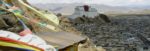
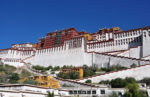
In Lhasa, stroll through the gardens of 18th century Norbulingka, the former summer residence of the Dalai Lamas. Light a yak-butter candle in Lhasa’s massive UNESCO-listed Potala Palace, a maze of over a thousand rooms with thousands of altars and statues. Wander the Barkhor Market, bargaining for yak-wool boots or local fur hats.
HIGHLIGHTS
- UNESCO-listed Potala Palace, with thousands of altars and statues
- Jokhang Temple, the most local sacred site since the 7th century
- Barkhor Market, the old market of Lhasa
- Norbulingka, the Dalai Lamas’ summer residence
Dates & Prices
Minimum group size: Minimums vary – call for confirmation status
Land Tour Price, Per Person.
Call for dates and prices
What's Included
-
Tour Includes
- Accommodations, as noted in the itinerary.
- All meals, from dinner on Day 1 through breakfast on final tour day, including a generous allowance of wine, local beer, and soft drinks with lunch and dinner.
- Arrival/departure transfers, provided you arrive and depart on the tour start/end dates and in the tour start/end cities.
- All guided off-train tours, as outlined in the itinerary.
- Services of an experienced Train Tour Manager as well as local guides for scheduled off-train tours.
- Complimentary tea, coffee, and mineral water from your car attendant at all times while on board the train.
- All gratuities.
- Baggage handling.
- Complete pre-departure information, including detailed packing list, reading list, and Touring with MIR handbook with country-specific information, maps, and travel tips.
- Customized visa application and instruction kit (please note, visa fees are not included in the tour price).
- Electronic final update bulletin, with any late news, updates and important information.
- Assistance booking your custom flight arrangements, on request. (Please note that international airfare is not included in the land tour cost).
-
Not Included
- International airfare, including taxes/fuel surcharges, and surface transport to the point of joining/leaving the tour. MIR is able to assist with arrangements, as detailed in the itinerary.
- Meals and drinks not specified as included in the itinerary.
- Single supplement (difference between double rate and single occupancy rate) if requested or required.
- Optional pre- or post-tour extensions.
- Expenses incurred as a result of delay, modification, or extension of a tour due to causes beyond MIR’s control.
- Visa fees, excess baggage charges, airport departure taxes, vaccination, and other medical costs.
- Travel insurance, including cancellation, medical, and evacuation insurance.
- Items of a personal nature, such as phone calls, email, laundry, and alcohol.
Activity Level
-
Level 3: Medium
Level 3: Medium
This rail journey by private train features touring at high elevations and significant touring on foot, throughout which travelers are expected to keep up with other group members. Walking during touring days will be on a variety of surfaces, with many streets and sidewalks being uneven, and elevators generally not available during touring excursions – leading to significant stair climbing. Challenges on board the train include long onboard distances with heavy doors as well as steep steps and gaps to navigate while embarking and disembarking. Only those willing to accept local standards of amenities and services should consider joining this program.
The elevation in Xizang is over 10,000 feet. The altitudes can cause difficulty even in healthy travelers, and potential problems can include headaches, shortness of breath, and other more serious complications. Those with a history of medical problems, particularly cardiac or respiratory, must consult a doctor before considering this trip.
Travelers must be able to walk two miles per day keeping up with other group members. Streets and sidewalks can be uneven or have unexpected surfaces, and handrails are not always present. Steps, which may be required due to lack of elevators, may be steep and/or uneven, and may also lack handrails. The distance on board the train between sleeping and dining carriages may be significant, and there are many heavy doors to navigate when moving throughout the train. Getting on and off the train involves navigating steep steps, low platforms, and possible gaps between the train and the platform. Navigating rail stations may also involve traveling up and over steep steps/footbridges to cross tracks, or steep steps and dark tunnels to cross under to/from the train station. Although porterage is provided where possible, you may have to carry your baggage for short distances.
General shortcomings of the tourism infrastructure may include problems with bureaucratic service and availability and quality of public restrooms when not on board the train.