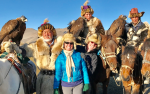
Photo credit: Traditional Mongolian Music MIR
The Oral Traditions That Outlasted Empires
Throat singing, Epic Storytelling & Polyphonic Music of Bulgaria, Mongolia, Georgia, and Kyrgyzstan

Long before there were books, there were singers. Across Mongolia, Central Asia, the South Caucasus, and Eastern Europe, the moments worth remembering, the genealogies, the great battles, the grief, and the gods were sung. Not written down and filed away, but performed, passed from one generation to the next through voice and memory. These oral traditions are very much alive around the world. When you travel with MIR to Mongolia, Kyrgyzstan, Georgia, or Bulgaria, you can hear them for yourself, from throat singing and epic storytelling to the polyphonic music that defines each region.
Bulgaria: Off-Beat On Purpose
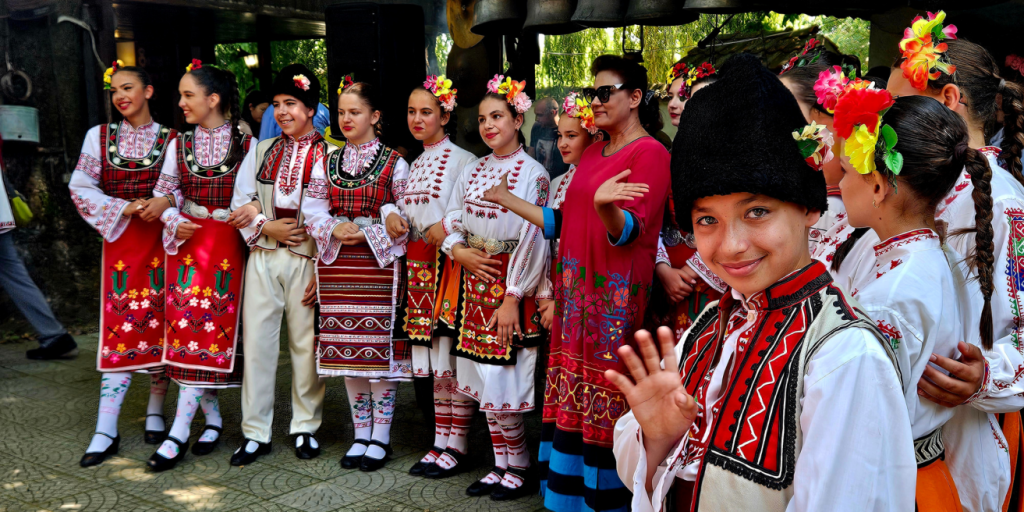
Bulgarian folk music is built on time signatures that trip you up at first. Dances run in seven or eleven beats, and it takes a little while before your ear finds the pattern. The horo, a circle dance, tends to pull people in off the sidelines. The music also varies considerably from region to region; the styles from the Rhodope Mountains sound nothing like those from the Thracian plain.
MIR’s small group tour, Bulgaria Romania: Frescoes and Fortresses, travels through this musical landscape.
Mongolia: The UNESCO-Recognized Sound of the Steppe
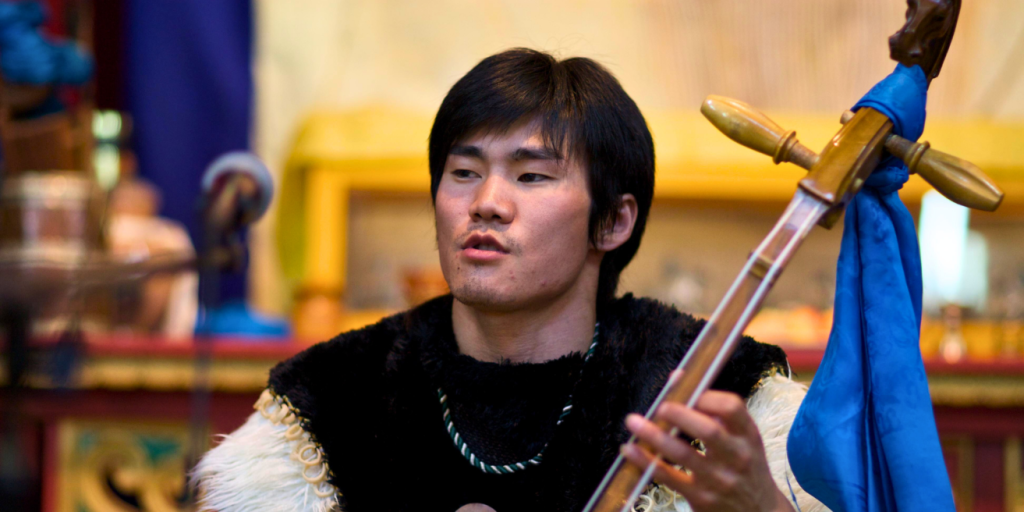
Throat singing, or khoomei, is one of those things that is hard to describe and nearly impossible to forget once you have heard it live. A single performer produces multiple pitches simultaneously, using the shape of the mouth, controlled breath, and resonance in ways that seem to defy what one person’s voice should be capable of.
This tradition developed among the herding communities of the steppe, often performed alongside the morin khuur, the horsehead fiddle. UNESCO recognized khoomei as Intangible Cultural Heritage in 2010. The Naadam Festival in July brings performances to Ulaanbaatar, and in the western provinces, you can still hear khoomei as it has always been heard – outdoors, on the open steppe.
Georgia: The Song That Traveled to Space
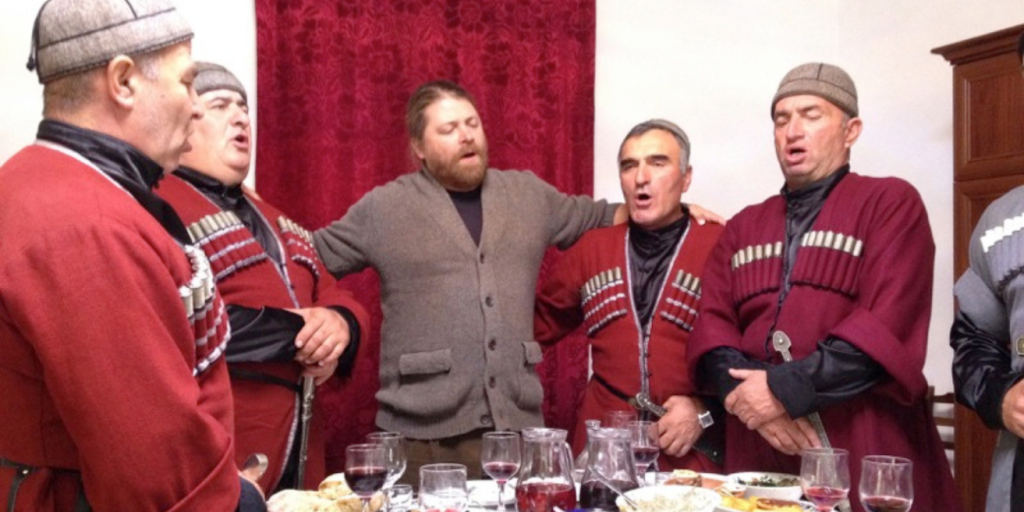
Georgian polyphony is unlike most choral music you have heard. Songs feature mainly three vocal lines, and harmonies go their own way. The best place to hear it is at a supra, the traditional Georgian feast where singing is as much a part of the table as food and wine. NASA apparently agreed: one of the pieces of Georgian polyphonic music, Chakrulo, was chosen for the Voyager Golden Record in 1977 and sent into space on the off chance that someone out there might be listening.
On MIR’s small group tour Treasures of the South Caucasus, you’ll hear polyphonic music from different regions of the country. Each has its own character.
Kyrgyzstan: The Epic Told From Memory
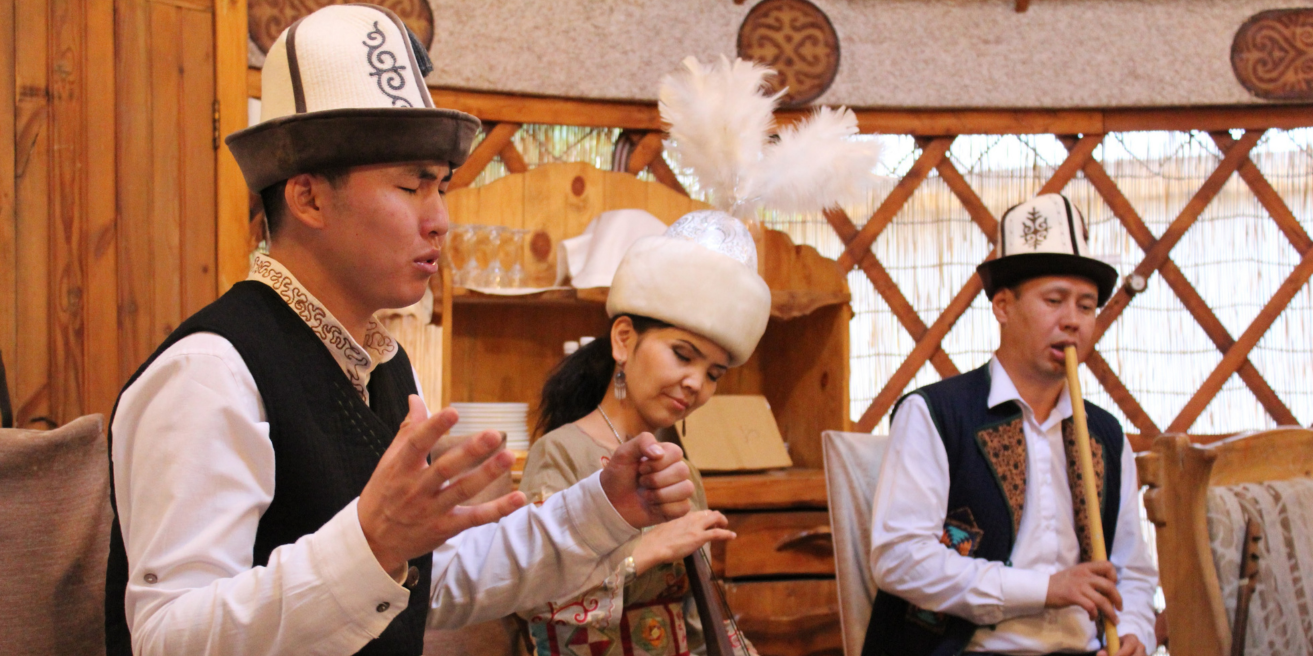
The Epic of Manas is one of the longest oral epics in the world, roughly 20 times the length of the Iliad and Odyssey combined. It tells the story of Manas, the hero who united the Kyrgyz people, and it has never really existed as a fixed text. It lives in the people who perform it.
A manaschi, a trained epic storyteller, recites from memory, and no two performances are quite alike. The pace shifts, the tone changes depending on the crowd, and the whole thing can run for hours. You come away with the sense that you have witnessed something genuinely old. It is a kind of storytelling that predates the printed page by centuries.
MIR’s small group tour Journey Through Central Asia: The Five ‘Stans includes performances arranged specifically for our travelers. We have added two new 2026 departures, August 23 to September 13 and October 18 to November 8, due to high demand.