Photo credit: Mariam Alughishvili
What Rustaveli Avenue Renovations Revealed Beneath Tbilisi
New Discoveries Beneath a Tbilisi Historical Landmark
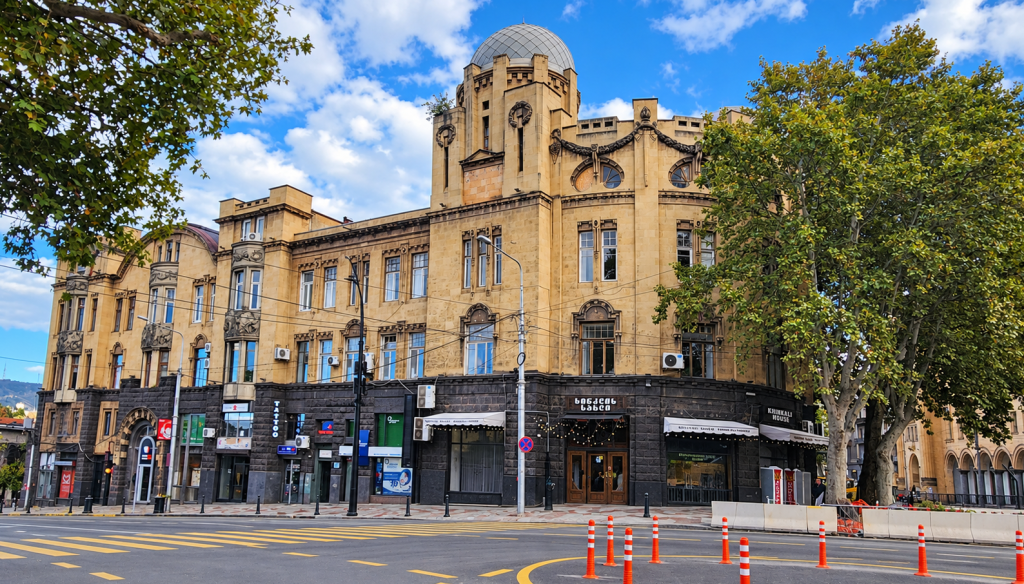
When Rustaveli Avenue in Tbilisi, Georgia began its major infrastructure renovation in 2026, the work brought archaeologists face to face with medieval Tbilisi. But another discovery emerged nearby, as restoration at Melik Azaryants House reopened its long-buried cellars and tunnels.
I saw the cleared spaces beneath the house in person. Two levels, once filled with trash and debris, were open again, along with passages built to manage water around the building. The experience made Tbilisi’s history feel close at hand. Here, the past isn’t only recorded in books or marked on plaques; it lies just beneath the pavement.
A 10th-century workshop beneath the avenue
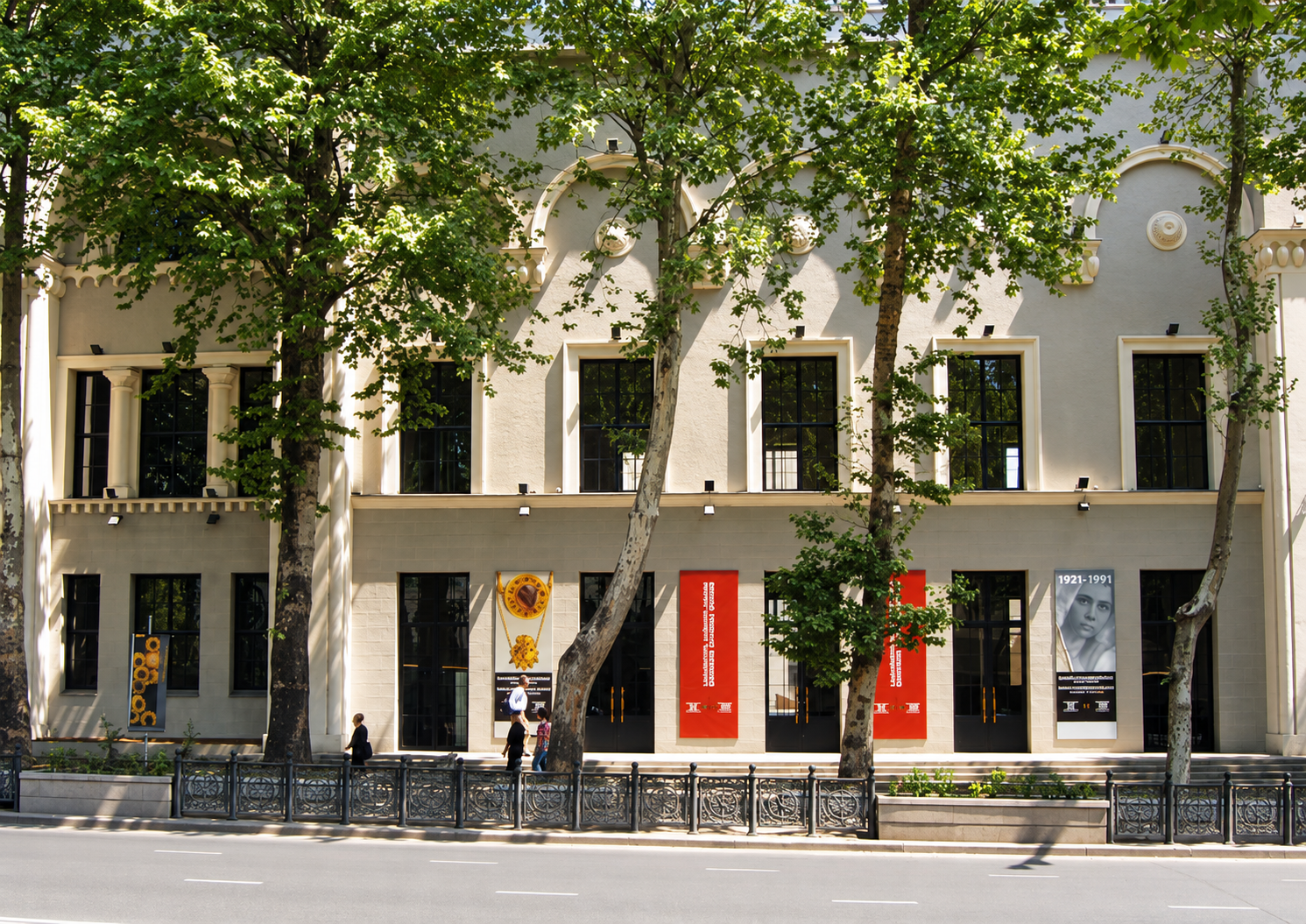
During roadworks near the National Youth Palace and the Georgian National Museum at 6 Rustaveli Avenue, archaeologists uncovered pottery and what they believe are the remains of a ceramic workshop. Local reports date the site broadly to the 10th–12th centuries; an earlier report gave the narrower estimate of the 10th–11th centuries. The artifacts are being studied by a team led by Georgian National Museum archaeologist Merab Dzneladze.
The dates place the workshop in a period when Tbilisi was governed by its own emirate. By the 10th century, the emirs had become practically independent of the Arab caliphs; Georgian King David IV took the city in 1122. Dzneladze has also said that the route beneath present-day Rustaveli Avenue carried caravans as part of the Silk Road network.
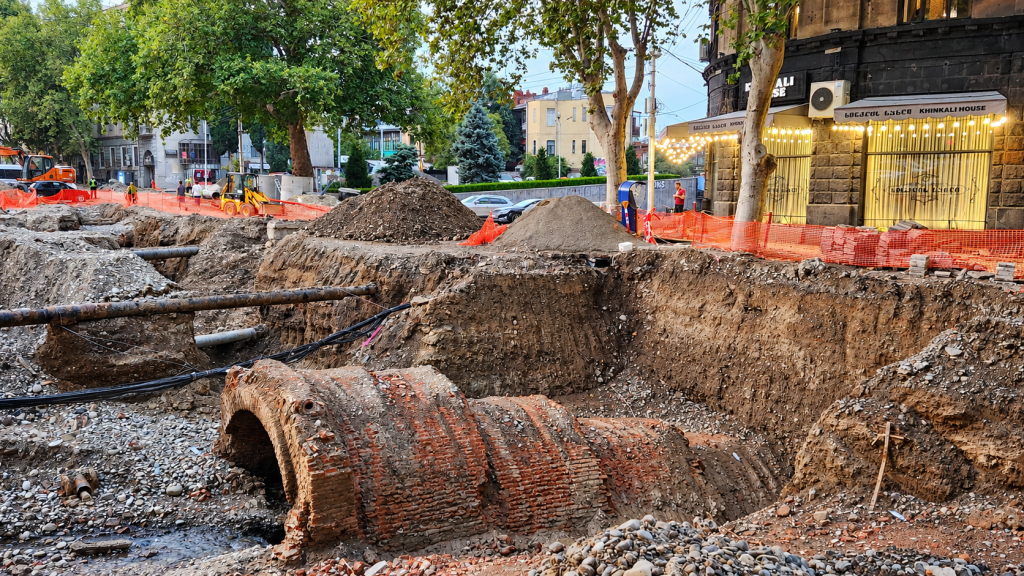
Crews uncovered another historical layer elsewhere along the avenue: brick structures believed to belong to a 19th-century collector system serving the old Garetubani district. The roadworks are exposing infrastructure from different periods, each beneath the city that came after it.
Two levels beneath Melik Azaryants House
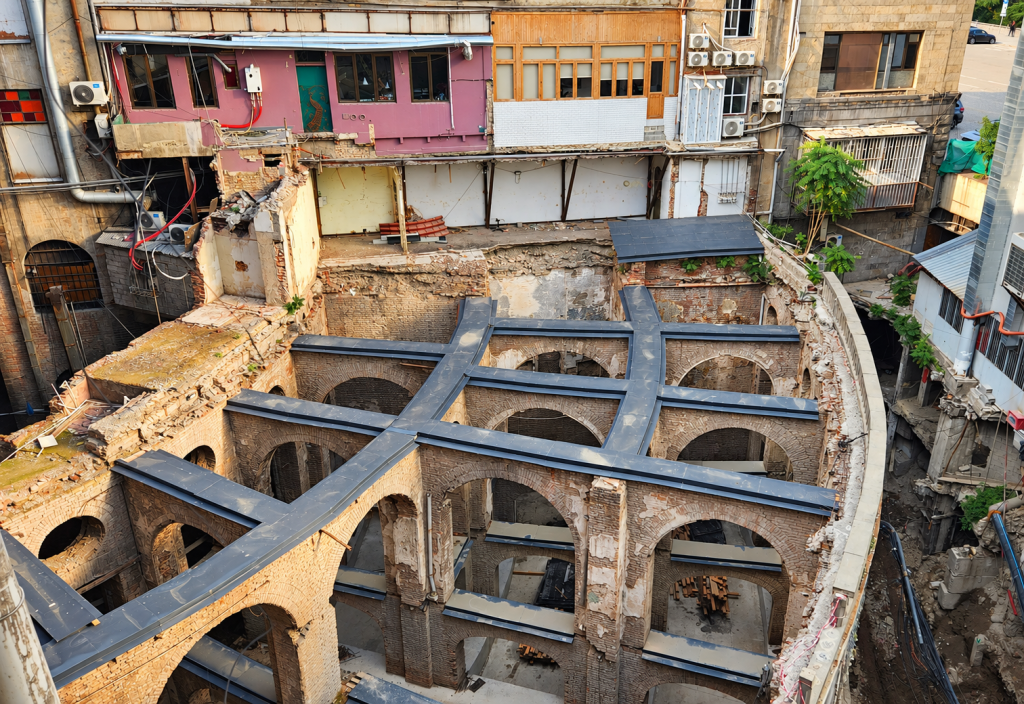
At 37 Rustaveli Avenue, the cleared cellars of Melik Azaryants House reveal two underground levels of rooms and passages once buried under trash and debris. Water tunnels are also visible in the substructure. The house was built on difficult ground, where underground water made construction a challenge. Historical accounts describe specially-fired bricks and lead reinforcement in its deep cellar-and-tunnel system. The restoration team reports they removed approximately 42,378 cubic feet of waste from the basement floors.
The merchant who built the house
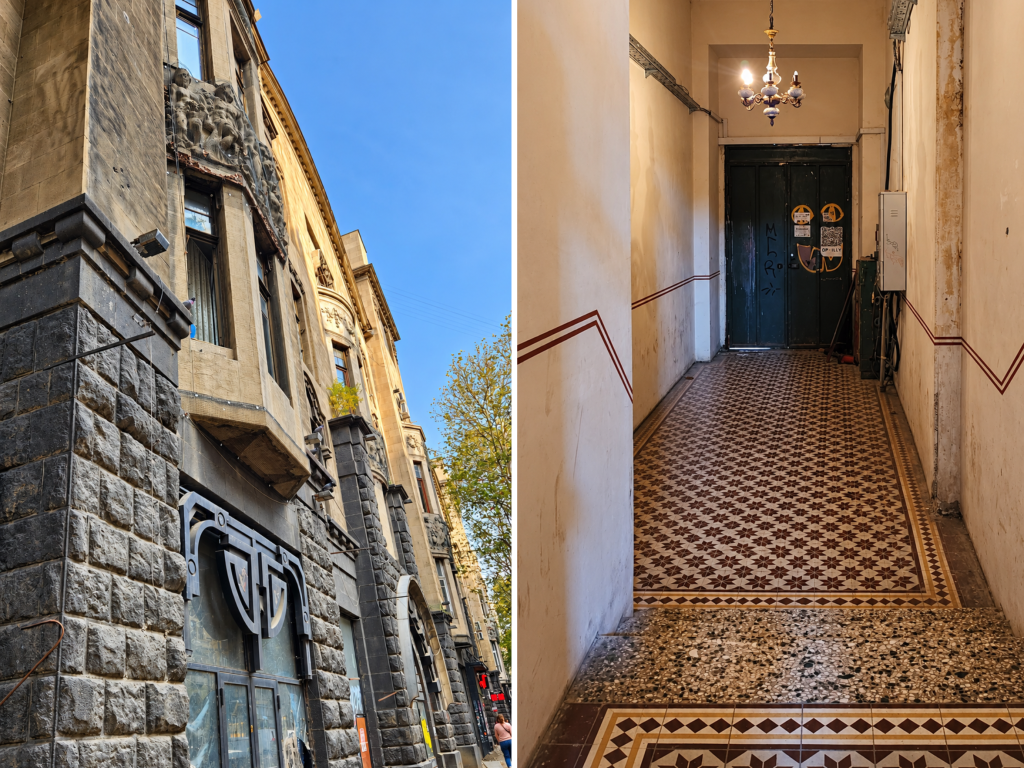
Alexander Melik Azaryants was a merchant, geologist, and philanthropist of Armenian descent, born in Tbilisi in 1847. His business interests included copper mining and refining. The house he commissioned was a large mixed-use complex, divided among six entrances, with shops, a kindergarten, a photo studio, an art gallery, and a cinema that archival accounts say could seat about 550 people.
A familiar story says Azaryants built the house in memory of his daughter Takuhi (also transliterated as Taguhi or Takui), who died at 22, and that the wreaths on the facade symbolize mourning. The story is disputed. One local historian notes that Takuhi reportedly died in 1904, eight years before construction began. He also points to other facade symbols that challenge the mourning interpretation. For now, it remains a local legend rather than settled fact
Look closely as you walk
Melik Azaryants House is easy to spot from Rustaveli Avenue. During a visit, I entered through the Jazz Cafe and reached the third floor, where I could see the uncovered underground spaces. Restoration is ongoing, so check whether the building permits access before going inside.
What’s been found beneath the avenue tells its history in physical form: medieval workshops and trade, 19th-century drainage, and the cellars engineered for the Azaryants house. Look up at the facades, then down at the old doorways and passages at street level, which hint at what lies underneath. In Tbilisi, the past runs both above and below your feet.